


Socialisation part 1 – why it is essential for your puppy
This is a huge subject, so I am just going to write an introduction and talk about the role of the breeder. That is basically what ‘socialisation’ means – an introduction. It means teaching your puppy about the world that it will be living in, so that it can cope with the demands of the human environment. As the Kennel club says:
“Like human children, puppies are not born with the social skills that they require to live with their family, be that a canine family or a human one. The term “socialisation” in simple terms means the learning process that a puppy must undergo in order to learn key life skills to ensure that it is happy and confident in its environment, and can communicate effectively within its social group.”


We understand that puppies, like babies, are sponges, soaking up everything around them and learning from these experiences. Historically, we probably didn’t really expect breeders to do anything much to contribute to this process, as dogs were kept in outhouses or sheds in the garden with their puppies. They might be brought into the family home for some of the time, but were generally left to their own devices.
For puppy farmers, there is no facility to socialise pups before they are shipped off to their new homes. Farmers don’t expect to have to do anything with the puppies and they may be kept in very poor conditions, with a mother who has little or no interaction with humans or other animals.
However, for responsible breeders, who are doing their utmost to produce pedigree dogs that the owners can be proud of, there is a challenge to provide the stimulation and experiences that the puppies will need in their new homes.
Socialisation plan
The Kennel Club have produced a useful step by step guide, the Puppy Socialisation Plan, which provides detailed examples of things that the breeder and the new owner can do to help their puppy develop.
Here is an example of part of the plan:
Week 5 – 7 – Curiosity: Tasks


Once the puppies are eating solid foods happily, feed them from different bowls – plastic, metal, from your hand etc.

Household life


Spend time with the puppy encouraging him to follow you, playing with him, making eye contact with him, stroking and handling him, picking him up and holding him – and generally getting him used to and enjoying human contact. Make sure all these interactions are positive for the puppy, using treats if necessary.
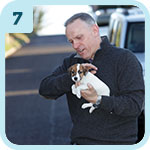
Putting this into practice
As you can see, the plan is practical and sensible, but it takes time and commitment. When I have a litter of puppies, I absolutely expect that I will be inundated with visitors! It’s one of the best things about having puppies; catching up with all my friends, seeing all my family and taking time out of my normal routine to sit and chat. While cuddling puppies – what could be better!
However, it does take a huge amount of time and effort to achieve all this and to do it well. Of course I also have to bear in mind the safety and security of the puppies. I need to know everyone who comes into the house and to take sensible precautions with regards hygiene. But for me, this process is so important that I am willing to devote my energy to it. I believe this is what makes my puppies grow up into the wonderful, beloved animals they are. Have a look at my testimonials page if you don’t believe me!
Ask for help?
You are very welcome to CONTACT ME to ask for my advice. I can help you with a variety of issues and problems around getting a dog and suggestions for tackling training issues. Go to the What Dog? page for more information on my new service.
Remember..
Please CONTACT ME if you want to know more about me and my dogs? And feel free to COMMENT if you want to tell me what you think. If you want to know more, why not FOLLOW ME? Then you will receive an email when there is a new post.
And if you receive my posts via email, remember to click through to the site to see the photos and lots more information.
4 thoughts on “Socialisation Part 1: what is it and why is it important?”